7 Signs Your Oral Microbiome Is Out of Balance
Published on June 8, 2026 | By ProDentim Scientific Team | 12 min read
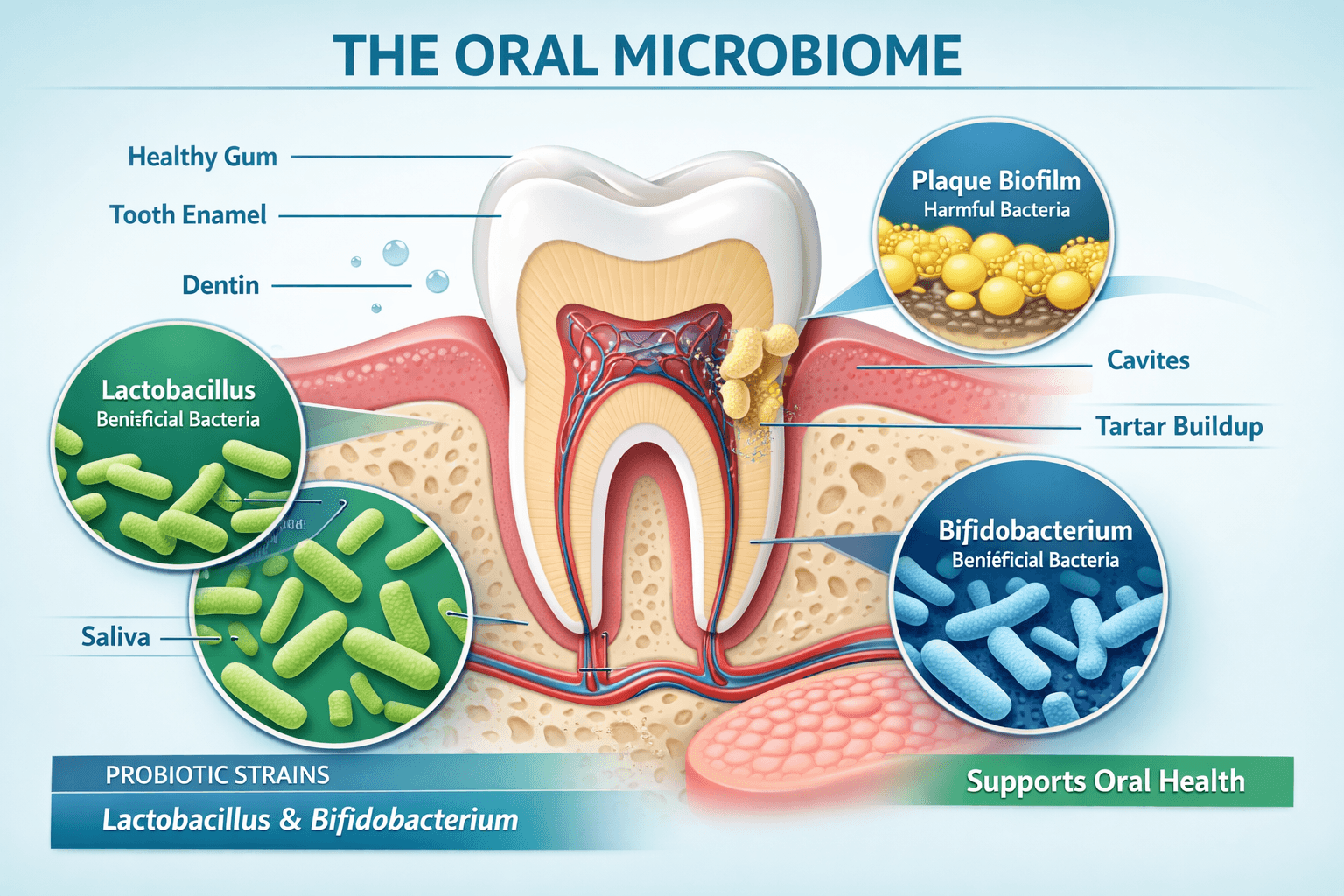
Your mouth is home to one of the most densely populated microbial communities in the human body, second only to the gut. Hundreds of species of bacteria live on your teeth, tongue, and gums, and in a healthy mouth they exist in careful equilibrium. Scientists call this community the oral microbiome, and when its balance is disrupted, the consequences rarely stay quiet. The mouth sends clear, recognizable warning signals.
This imbalance has a clinical name: oral dysbiosis. It happens when harmful, acid- and odor-producing bacteria gain the upper hand over the beneficial strains that normally keep them in check. The good news is that dysbiosis is reversible, and it almost always announces itself first. Below are the seven most common signs that your oral microbiome may be out of balance, and what the science says you can do about each one.
1Persistent Bad Breath That Won't Go Away
If your breath turns stale within an hour of brushing, the cause is usually bacterial, not hygienic. Odor-producing anaerobes release Volatile Sulfur Compounds (VSCs) that brushing cannot reach on the back of the tongue and in the gum line. Chronic halitosis is one of the earliest and most reliable indicators that the bacterial balance has tipped toward the wrong species [1]. We cover this in depth in our guide on why bad breath persists after brushing.
2Gums That Bleed When You Brush or Floss
Healthy gums do not bleed during normal brushing. Bleeding is the hallmark of gingival inflammation, the body's immune response to an overgrowth of pathogenic bacteria such as Porphyromonas gingivalis along the gum line. Left unchecked, this low-grade inflammation is the first stage on the path to periodontal disease. Bleeding gums are a direct visual signal that harmful bacteria are dominating the gum-line ecosystem.
3Frequent Cavities Despite Good Brushing Habits
Getting new cavities even though you brush and floss diligently is a classic sign of dysbiosis. Tooth decay is driven largely by Streptococcus mutans, a bacterium that thrives on sugar and produces acid that dissolves enamel. When beneficial, acid-neutralizing strains are depleted, S. mutans flourishes and cavities multiply regardless of how carefully you clean. The problem is the population, not the brushing.
4A White or Yellow Coating on Your Tongue
A thick, persistent coating on the tongue, especially toward the back, is a visible mat of accumulated bacteria, dead cells, and debris. While a light film is normal, a heavy coating that returns quickly after cleaning indicates that anaerobic species are overpopulating the tongue's surface. This coating is both a sign of imbalance and a major contributor to bad breath.

5Increased Tooth Sensitivity and Gum Recession
When harmful bacteria persist along the gum line, the resulting chronic inflammation can cause gums to pull away from the teeth, exposing the sensitive root surface. The result is heightened sensitivity to hot, cold, and sweet foods. Gum recession driven by bacterial imbalance tends to progress slowly and silently, which is why noticing early sensitivity matters.
6A Constant Bad or Metallic Taste in Your Mouth
An ongoing unpleasant, sour, or metallic taste that is not linked to food often reflects the metabolic byproducts of an overgrown bacterial population. As pathogenic species break down proteins and produce sulfur compounds and acids, they alter the taste environment of the mouth. A lingering off-taste, particularly alongside other signs on this list, points to dysbiosis.
7Recurring Mouth Irritation, Sores, or Dry Mouth
Frequent canker sores, irritation, or a persistently dry mouth can both signal and worsen microbial imbalance. Saliva is essential for keeping beneficial bacteria thriving and washing away harmful ones; when saliva drops, the ecosystem destabilizes. Recurring irritation suggests the protective microbial layer is compromised and harmful species are gaining ground.
What Pushes the Oral Microbiome Out of Balance?
Understanding the causes makes the signs easier to reverse. Oral dysbiosis is usually the cumulative result of everyday factors rather than a single event.
| Trigger | Effect on the Microbiome |
|---|---|
| High-sugar, refined-carb diet | Feeds acid-producing S. mutans, driving decay |
| Alcohol-based antiseptic mouthwash | Kills beneficial bacteria along with harmful ones |
| Dry mouth and dehydration | Removes saliva's protective, balancing effect |
| Smoking and tobacco | Promotes pathogenic species and gum inflammation |
| Frequent antibiotic use | Wipes out diverse beneficial strains |
How to Restore Balance to Your Oral Microbiome
The encouraging reality is that the oral microbiome responds quickly to change. Because beneficial bacteria reproduce rapidly when given the chance, restoring balance is often faster than people expect. A complete approach works on three fronts: stop feeding the harmful bacteria, protect your natural defenses, and actively repopulate the good strains.
- Reduce sugar and refined carbohydrates. Starving acid-producing bacteria is the single most powerful dietary lever.
- Protect your saliva. Hydrate, breathe through your nose, and skip drying alcohol-based rinses.
- Clean smarter, not harsher. Floss and scrape your tongue to reduce bacterial reservoirs without sterilizing the whole mouth.
- Repopulate with oral probiotics. This step actively tips the balance back toward beneficial species.
The Role of Oral Probiotics in Rebalancing
Oral probiotics deliver beneficial bacteria, such as Lactobacillus reuteri, Lactobacillus paracasei, and Bifidobacterium lactis, that naturally inhabit a healthy mouth. They work by competitive exclusion, occupying the surfaces and consuming the nutrients that harmful species would otherwise use. A 2023 systematic review in Pharmaceuticals found that probiotic supplementation can improve key markers of oral health by restoring microbial balance rather than destroying it [2]. Clinical work on strains like L. reuteri has also shown measurable improvement in gum health over a matter of weeks [3].
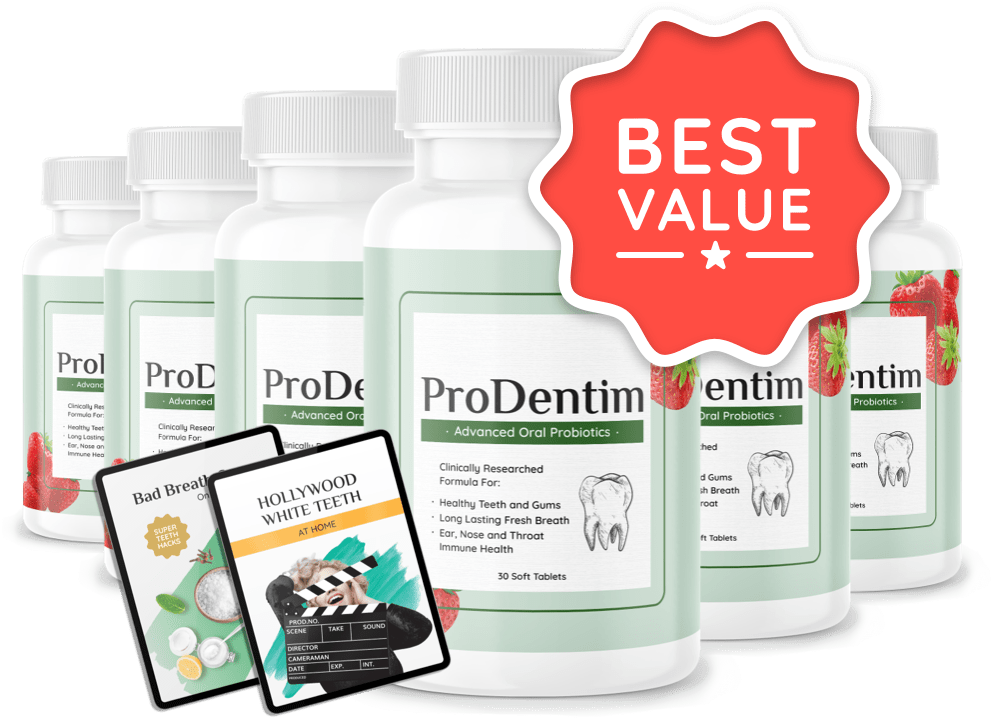
This is the foundation of probiotic oral care products such as ProDentim, which combine several clinically studied strains with prebiotic and natural ingredients like inulin, malic acid, and peppermint. Rather than treating each of the seven signs in isolation, the aim is to restore the balanced ecosystem that prevents them from arising in the first place. To go deeper, see our complete guide to oral probiotics and their benefits.
When to See a Dental Professional
The signs above are common and usually reversible, but some warrant professional attention. Persistent gum bleeding, increasing tooth sensitivity, loose teeth, or sores that do not heal within two weeks should be evaluated by a dentist. Microbiome support complements professional dental care; it does not replace regular checkups, cleanings, or treatment of established gum disease.
Conclusion: Listen to What Your Mouth Is Telling You
Bad breath, bleeding gums, frequent cavities, a coated tongue, sensitivity, a lingering bad taste, and recurring irritation are not seven unrelated annoyances. They are seven dialects of the same message: the bacterial balance in your mouth has shifted. Recognizing these signs early gives you the chance to act before minor imbalance becomes lasting damage. Reduce what feeds the harmful bacteria, protect your saliva, clean intelligently, and repopulate the beneficial strains, and the ecosystem will work in your favor again.
References:
[1] Aydin M, Harvey-Woodworth CN. "Halitosis: a new definition and classification." British Dental Journal review. View Source
[2] Inchingolo F, et al. "The Benefits of Probiotics on Oral Health: Systematic Review of the Literature." Pharmaceuticals (Basel). 2023. View Source
[3] Burton JP, et al. "Effect of probiotic strains on oral malodour and microbiology parameters." Journal of Applied Microbiology. 2006. View Source
[4] Deo PN, Deshmukh R. "Oral microbiome: Unveiling the fundamentals." Journal of Oral and Maxillofacial Pathology. 2019.
Related reading: Why Do I Still Have Bad Breath After Brushing? · How Probiotics Support Healthy Gums & Fresh Breath